

How to Improve Sleep Apnea: Tips for Better Sleep
Waking up tired after what should have been a full night of sleep can be incredibly frustrating. You may go to bed for eight hours,
Published on
You open your mouth to take a bite, and it feels tight. You try to speak, but your jaw won’t open fully. There is stiffness, maybe even pain. Simple things like eating or brushing your teeth suddenly feel harder than they should.
When the jaw gets that locked feeling, it might be trismus. Many people do not know what causes trismus or why it happens. They simply hope it will go away. But when it doesn’t, life becomes uncomfortable. The pain continues, and daily activities get tougher.
So, let us explore the roots of this problem and understand what leads to restricted jaw movement. Knowing the causes of trismus gives you a head start in choosing the right care.
Trismus is a condition where your mouth can’t open as wide as it normally should. Many people refer to it as lockjaw. In a healthy jaw, you should be able to open your mouth wide enough to place two to three fingers between your teeth. If that feels difficult or impossible, something is restricting the movement.
This restriction usually comes from tight or irritated jaw muscles, or sometimes from the joint itself. The jaw is controlled by four main muscles. The masseter and medial pterygoid muscles are the ones most often responsible for the stiffness. They help you bite and chew and when they become tense or go into spasm, your jaw may feel stuck or heavy.
So if you are wondering trismus caused by which muscle, it is commonly these chewing muscles. The next step is understanding why they become tight in the first place.
Jaw stiffness doesn’t just appear without a trigger. The causes of trismus can range from something temporary, like muscle strain, to conditions that need proper medical care. Understanding the exact cause helps you choose the right treatment instead of guessing.
A lot of patients complain about difficulty moving the jaw due to inflammation. Just like all the other joints in the body, the temporomandibular joint and jaw muscles are susceptible to swelling and restriction. This occurs when you have a sprained ankle, and your joint feels stiff as a result.
When a person suffers from bruxism, or teeth grinding, especially during sleep, the muscles supporting the jaw are constantly strained. This is also seen in patients with other sleep issues like snoring, obstructive sleep apnoea etc. The body responds by contracting the muscles around the jaw to prevent further damage to the joint, resulting in a locked jaw.
Dental treatments are one of the most frequent causes for trismus. If your mouth stays open for a long time during procedures like wisdom tooth removal or root canal treatment, the jaw muscles can become overworked. Just like any muscle, they get tired and tight.
In some cases, swelling from local anesthesia injections can irritate nearby muscles. This may limit how wide you can open your mouth for a few days. Usually, the stiffness settles on its own. But if it does not improve, it should not be ignored.
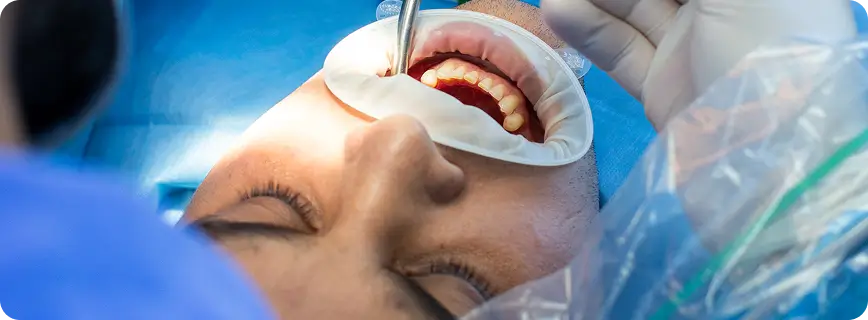
Any injury to the face or jaw can trigger muscle spasm. The body naturally tightens muscles to protect an injured area. That protective tightening can reduce jaw movement.
Fractures, bruising, or swelling after an accident may all lead to stiffness. Sometimes the restriction shows up right away. Other times it appears gradually as swelling increases. Jaw tightness after an injury should always be evaluated by a doctor.
Radiation treatment for head and neck cancers can change the flexibility of tissues around the jaw. Over time, muscles and connective tissues may become stiff.
This gradual tightening, known as fibrosis, limits how wide the mouth can open. It may develop weeks or months after treatment. In such cases, guided exercises and specialised care are often needed to maintain movement.
Stress often shows up physically. Many people clench their jaw or grind their teeth, especially during sleep. This constant tension overworks the chewing muscles.
The masseter muscle is commonly involved when someone asks trismus caused by which muscle. When this muscle stays tight for too long, it can restrict jaw movement. And stress-related trismus usually builds up slowly rather than happening suddenly.
These are the primary causes of trismus. Some improve with rest and simple care, while others need targeted treatment. Knowing what is behind the stiffness makes it easier to manage the condition properly.
Trismus mainly affects how wide you can open your mouth. The signs can be mild at first, but they become more noticeable during daily activities like eating or speaking.
Symptoms can range from mild tightness to significant restriction. If they last more than a few days or get worse, it’s important to seek medical advice.
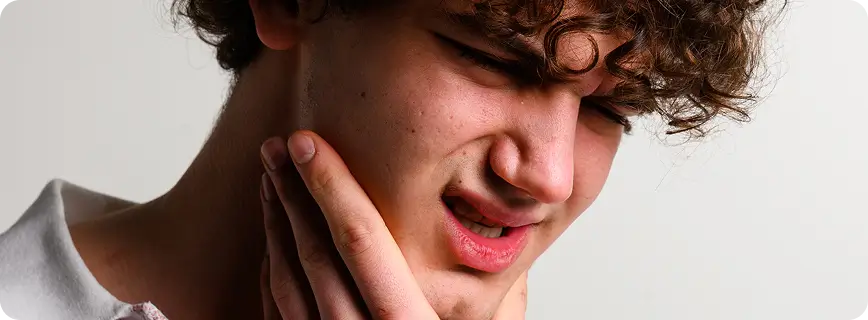
Mild trismus can often be managed at home, especially if it is due to temporary muscle strain. The goal is to reduce tightness and ease discomfort.
A restricted opening is not just a minor inconvenience; it creates obstacles for your physical well-being and overall reduces the quality of Life. Your inability to open your mouth wide hinders brushing your back molars and consequently makes you prone to cavities. The ability to properly chew your meals gets hindered as well, and if any underlying conditions such as obstructive sleep apnoea are present, a receding jaw will negatively affect your breathing capacity.
If jaw stiffness doesn’t improve, it’s important to seek medical advice.
Watch out for these warning signs:
Restricted jaw movement shouldn’t be ignored. What feels like slight stiffness can start affecting eating, speaking, and daily comfort later on. The causes of trismus may be simple, like dental strain or stress, or linked to TMJ disorders and infections. The important thing is finding the real reason early instead of guessing.
If your jaw keeps feeling tight, don’t wait it out. At The Right Bite Sleep and TMJ Pain Care, our team focuses on identifying the exact cause and treating it precisely. With specialised TMJ expertise, we help restore smooth, comfortable jaw movement so you can get back to normal. Reach out today.
Contact us
Our other blogs
How to Improve Sleep Apnea: Tips for Better Sleep
Waking up tired after what should have been a full night of sleep can be incredibly frustrating. You may go to bed for eight hours,
Snoring and Dry Mouth: Causes, Connection and When to Seek Help
You wake up with a parched mouth, a sore throat and the feeling that your sleep did not do much good. Your partner, meanwhile, may

How to Improve Sleep: Simple Tips to Sleep Better and Wake Up Refreshed
You can spend eight hours in bed and still wake up feeling like you have barely slept. Your alarm rings, you hit snooze, then finally
WhatsApp us