
Snoring and Dry Mouth: Causes, Connection and When to Seek Help
You wake up with a parched mouth, a sore throat and the feeling that your sleep did not do much good. Your partner, meanwhile, may
Published on
Table of contents
Many people think braces can fix every dental problem. But sometimes, the issue isn’t just with the teeth. The jaw itself may not be growing or functioning properly, and that can affect the bite, facial balance, chewing, and overall oral health. Orthodontics and Dentofacial Orthopedics are two closely related specialties that address these concerns, but they focus on different aspects of treatment.
Parents often notice crooked teeth, mouth breathing, difficulty chewing, or jaw shifting in their child but aren’t sure whether it’s normal or something that needs treatment. Adults may also struggle with bite problems or jaw imbalance without realizing the actual cause.
Understanding these meaning helps you identify whether the problem is related to teeth alignment, jaw growth, or both. And honestly, that difference matters because the treatment approach changes depending on what’s actually causing the issue.
Orthodontics is a dental specialty that focuses on straightening teeth and correcting bite problems. It’s mainly used to improve teeth alignment, bite function, and oral health.
Dentofacial orthopedics focuses on guiding the growth and position of the jaw and facial bones. This treatment is usually recommended when jaw development affects the bite, facial structure, or teeth alignment.
In simple terms:
Some patients only need orthodontic treatment, while others may need dentofacial orthopedic treatment before braces or aligners are started. In many cases, both treatments work together to improve bite balance and jaw function.
That’s why understanding orthodontics and dentofacial orthopedics meaning is important before starting treatment.

Orthodontics is for people who have teeth alignment or bite-related problems. The goal is to improve how the teeth fit together, function, and look.
Orthodontic treatment is commonly recommended for:
Both children and adults can benefit from orthodontic treatment. Depending on the condition, treatment may involve braces, clear aligners, retainers, or other orthodontic appliances.
Dentofacial orthopedics is mainly for growing children whose jaw and facial bones are not developing properly. Since the jawbones are still growing during childhood, treatment can help guide jaw development in a healthier direction.
Dentofacial orthopedic treatment may be recommended for:
Some children may also develop jaw changes because of long-term thumb sucking or tongue-thrust habits.
Understanding dentofacial orthopedics meaning becomes important when the issue involves jaw position and facial development, not just crooked teeth.
| Teeth Alignment Problems | Jaw Growth Problems |
|---|---|
| Affect the position of the teeth | Affect the size, position, or growth of the jaw |
| Usually involve crooked, crowded, or spaced teeth | Usually involve imbalance between the upper and lower jaws |
| Commonly treated with braces or clear aligners | Commonly treated with dentofacial orthopedic appliances |
| Teeth may not fit together properly because of alignment issues | Bite problems happen because the jaw structure itself is uneven |
| Mainly focuses on moving teeth into better position | Focuses on guiding jaw and facial bone development |
| Can affect chewing, cleaning of teeth, and appearance | Can affect facial balance, bite function, breathing, and chewing |
| Orthodontic treatment is usually enough | May need jaw growth correction before braces begin |
Orthodontic treatment does more than improve appearance. Properly aligned teeth are easier to clean, function better during chewing, and place less strain on the surrounding teeth and jaw.
Orthodontics commonly treats:
Treatment may involve braces, aligners, retainers, or other appliances depending on the patient’s age and bite condition. In some cases, early treatment can also reduce the severity of future orthodontic problems.

Jaw growth problems are often easier to correct during childhood because the facial bones are still developing. But many people don’t notice the early signs until the bite or facial balance changes more visibly.
You may need dentofacial orthopedic treatment if you notice:
Dentofacial orthopedic appliances help guide jaw growth gradually and improve how the upper and lower jaws fit together. In many cases, this treatment is done before braces to create better jaw alignment and space for permanent teeth.
Jaw development doesn’t only affect the teeth. It can also influence breathing patterns, facial growth, and oral function over time.
For example, a narrow upper jaw may reduce space inside the mouth and affect airflow, especially during sleep. Some patients with jaw growth problems may also develop:
Over time, these habits may affect facial development and bite alignment, especially in growing children. That’s why orthodontists often evaluate breathing patterns and jaw growth together during treatment planning.
Many parents wait until all permanent teeth come in before seeing an orthodontist. But some jaw growth and bite problems are easier to correct during childhood while the bones are still developing.
The American Association of Orthodontists recommends the first orthodontic evaluation around age 7. This helps identify:
This doesn’t always mean treatment starts immediately. Sometimes the orthodontist simply monitors growth and recommends follow-up visits later.
Adults can also benefit from orthodontic treatment, although jaw growth itself usually can’t be guided after skeletal development is complete.
The treatment depends on whether the problem is related to teeth alignment, jaw growth, or both.
During the evaluation, the orthodontist checks:
Bite alignment
Jaw position
Facial balance
Teeth spacing and crowding
Oral habits affecting jaw development
X-rays, scans, and photographs may also be taken to examine the teeth and jaw structure properly.
If the issue is limited to teeth alignment, braces or aligners may be enough. But if the jaw structure is affecting the bite or facial development, dentofacial orthopedic treatment may also be needed.
Orthodontic treatment works by applying gentle pressure to gradually move teeth into better alignment over time.
Depending on the condition, treatment may involve:
Treatment time depends on the severity of the problem, the patient’s age, and whether jaw correction is also involved. Regular follow-ups are important to monitor tooth movement and bite changes properly.
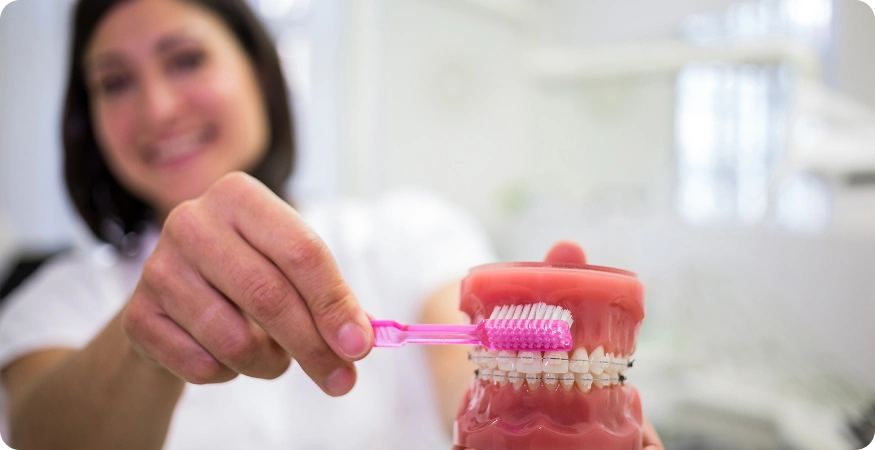
The goal of treatment isn’t just straighter teeth. Proper treatment can improve oral function, bite stability, jaw balance, and long-term dental health too.
Benefits may include:
And when jaw problems are identified early, treatment is often simpler and more predictable later.
Understanding orthodontics and dentofacial orthopedics meaning helps you recognize whether the issue is related to teeth alignment, jaw growth, or both. Problems like crowding, bite imbalance, jaw shifting, mouth breathing, and uneven facial development shouldn’t be ignored because they can gradually affect oral function and long-term comfort.
At The Right Bite and TMJ Care, every treatment plan is designed after carefully evaluating the teeth, bite, jaw position, and facial development. Whether the treatment involves braces, jaw growth correction, or a combination of both, early diagnosis and the right approach can improve both function and long-term oral health.
Not always. Braces straighten teeth, but if the jaw position is causing the bite problem, jaw growth treatment or other correction may also be needed.
Mostly yes, because jaw growth treatment works best while the bones are still developing. Adults can still get braces or aligner treatment for teeth alignment problems.
Because mouth breathing and poor tongue posture can affect jaw growth, bite alignment, and facial development, especially during childhood growth years.
Contact us
Our other blogs
Snoring and Dry Mouth: Causes, Connection and When to Seek Help
You wake up with a parched mouth, a sore throat and the feeling that your sleep did not do much good. Your partner, meanwhile, may

How to Improve Sleep: Simple Tips to Sleep Better and Wake Up Refreshed
Home > Blogs > How to Improve Sleep: Simple Tips to Sleep Better and Wake Up Refreshed How to Improve Sleep: Simple Tips to Sleep
Sports Mouth Guard vs Dental Mouth Guard: Key Differences
A mouthguard can look like a simple piece of plastic, but choosing the wrong type can leave your teeth, jaw, and dental work inadequately protected.
WhatsApp us