Why Migraine Headache Occurs: Causes, Symptoms & How to Cure
A migraine headache is a form of a severe headache and is accompanied by a host of other symptoms. Migraines can interfere with daily routine
Published on
Table of contents
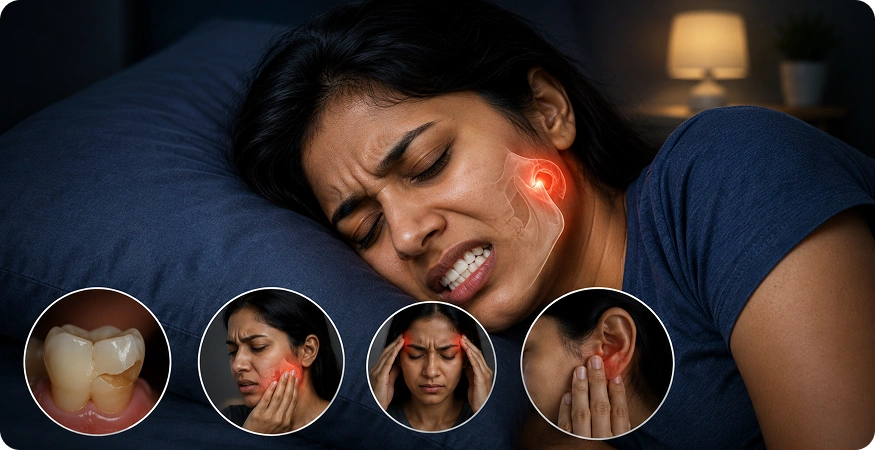
Waking up with a dull, throbbing headache, a tender jaw, or sensitive teeth? You aren’t alone. Millions of people ground their teeth while sleeping without ever realizing it.
Teeth grinding, medically known as bruxism, is a common condition where you unconsciously clench or grind your teeth. When this happens during sleep, it is referred to as bruxism during sleep or sleep bruxism. Left unchecked, night grinding can wear down enamel, cause severe facial pain, and lead to chronic health issues.
Learning how to stop bruxism at night starts with understanding why your jaw is clenching in the dark and discovering modern, precise treatments that offer lasting relief.
Sleep bruxism rarely happens in a vacuum. It is usually triggered by a combination of physical, psychological, and lifestyle factors:
One of the most significant causes of sleep bruxism is Obstructive Sleep Apnoea (OSA).
When your airway collapses during sleep, your brain senses a drop in oxygen levels. In a micro-arousal reflex, the body tightens the jaw muscles to push the tongue forward and reopen the airway. If you frequently grind your teeth, snore loudly, or wake up gasping for air, your body may be instinctively fighting to breathe. Addressing underlying sleep breathing issues is often the missing piece in stopping night grinding.
Common Symptoms of Nighttime Teeth Grinding
Because bruxism happens while you sleep, many people do not realize they do it until damage appears. Common warning signs include:
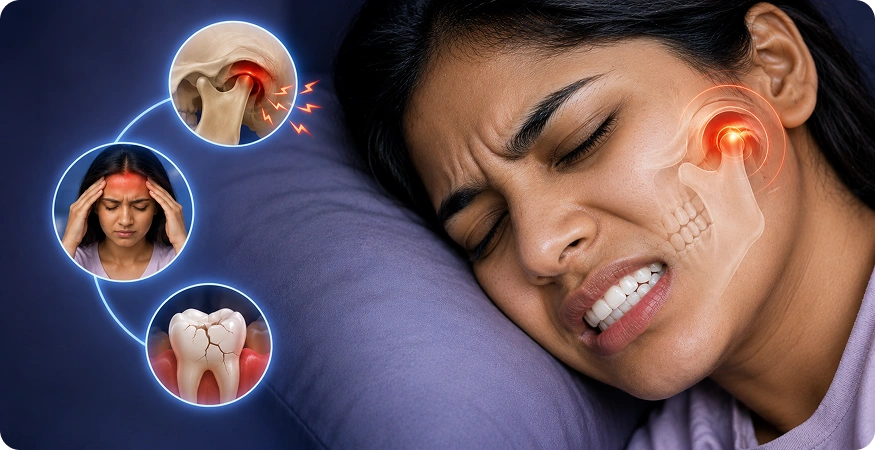
When teeth grinding becomes a nightly habit, the intense force sometimes up to 250 pounds of pressure takes a heavy toll on your jaw joint, known as the temporomandibular joint (TMJ).
Over time, chronic bruxism can cause or worsen TMJ disorders (TMD). This leads to clicking or popping jaw sounds, locked jaw joints, and persistent facial pain.
Living with severe bruxism and TMJ issues can become debilitating:
Many people try over-the-counter night guards, only to find they feel bulky or worsen jaw pain. Traditional night guards act like a shield to protect tooth enamel, but they do not stop the underlying muscle spasms causing the clenching.
To truly stop bruxism, modern neuromuscular dentistry focuses on finding your jaw’s natural, relaxed resting position.
Precise Diagnostic Technology
Rather than relying on guesswork, advanced clinical care utilizes precise evaluation tools:
Using data from ULF-TENS, surface EMGs, and 3D jaw tracking, custom oral sleep appliances and neuromuscular orthotics can be designed.
Unlike generic night guards, these specialized appliances hold your jaw in its ideal position throughout the night. By stabilizing the jaw and keeping the airway open, these custom devices help stop the grinding reflex, protect your teeth, relieve TMJ strain, and restore your sleep quality.
Along with professional dental care, simple daily habits can help calm hyperactive jaw muscles:
Teeth grinding does not have to ruin your sleep or compromise your daily quality of life. If you wake up with jaw soreness, frequent headaches, or sensitive teeth, seeking professional evaluation is the first step toward lasting relief.
By addressing root causes like sleep apnoea and utilizing advanced, diagnostic-driven oral appliances, you can protect your smile, eat comfortably, and enjoy restful sleep again. Schedule a consultation with your airway dentist / TMJ dental professional to learn how precision treatment can restore your jaw health.
Contact us
Our other blogs

Why Migraine Headache Occurs: Causes, Symptoms & How to Cure
A migraine headache is a form of a severe headache and is accompanied by a host of other symptoms. Migraines can interfere with daily routine

Sleeping Pills Warning Never Ignore: Long-Term Side Effects & Treatment
Everyone has experienced this at some point. After 2 A.M., your worries multiply, and your unfinished tasks threaten your upcoming day with an ever-growing, anxiety-laden
7 Common Causes of Pain in the Cheek Muscles
Pain in the cheek muscles can cause soreness, tightness, or discomfort around the jaw and face. Many people notice the pain while chewing, speaking, yawning,
WhatsApp us