Skip to content

The Right Bite Sleep and TMJ Pain Care

Home > Blogs > How to Stop Bruxism at Night: Causes, Symptoms & Teeth Grinding Treatment

How to Stop Bruxism at Night: Causes, Symptoms & Teeth Grinding Treatment

Published on

JULY 30
2026

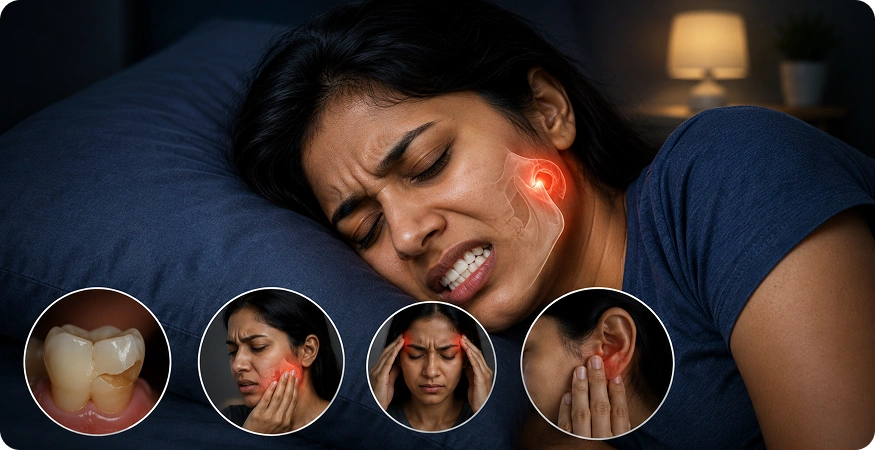
Waking up with a dull, throbbing headache, a tender jaw, or sensitive teeth? You aren’t alone. Millions of people ground their teeth while sleeping without ever realizing it.

Teeth grinding, medically known as bruxism, is a common condition where you unconsciously clench or grind your teeth. When this happens during sleep, it is referred to as bruxism during sleep or sleep bruxism. Left unchecked, night grinding can wear down enamel, cause severe facial pain, and lead to chronic health issues.

Learning how to stop bruxism at night starts with understanding why your jaw is clenching in the dark and discovering modern, precise treatments that offer lasting relief.

What Causes Bruxism During Sleep?

Sleep bruxism rarely happens in a vacuum. It is usually triggered by a combination of physical, psychological, and lifestyle factors: 

  • Stress and Anxiety: High stress levels cause subconscious muscle tension, which frequently manifests as jaw clenching while you sleep. 
  • Bite Misalignment (Malocclusion): When upper and lower teeth do not fit together naturally, the jaw muscles strain to find a comfortable resting place. 
  • Lifestyle Habits: Caffeine consumption late in the day, alcohol, tobacco use, and certain medications can heighten nighttime muscle activity. 

The Overlooked Link: Bruxism and Obstructive Sleep Apnoea (OSA)

One of the most significant causes of sleep bruxism is Obstructive Sleep Apnoea (OSA). 

When your airway collapses during sleep, your brain senses a drop in oxygen levels. In a micro-arousal reflex, the body tightens the jaw muscles to push the tongue forward and reopen the airway. If you frequently grind your teeth, snore loudly, or wake up gasping for air, your body may be instinctively fighting to breathe. Addressing underlying sleep breathing issues is often the missing piece in stopping night grinding. 

Common Symptoms of Nighttime Teeth Grinding 

Because bruxism happens while you sleep, many people do not realize they do it until damage appears. Common warning signs include: 

  • Flattened, chipped, or loose teeth 
  • Worn-down tooth enamel exposing sensitive lower layers 
  • Morning jaw muscle fatigue, soreness, or facial tightness 
  • Unexplained earaches or dull tension headaches starting at the temples 
  • Partners waking up from loud grinding noises at night 

The Danger of Chronic Bruxism: TMJ Issues & Reduced Quality of Life

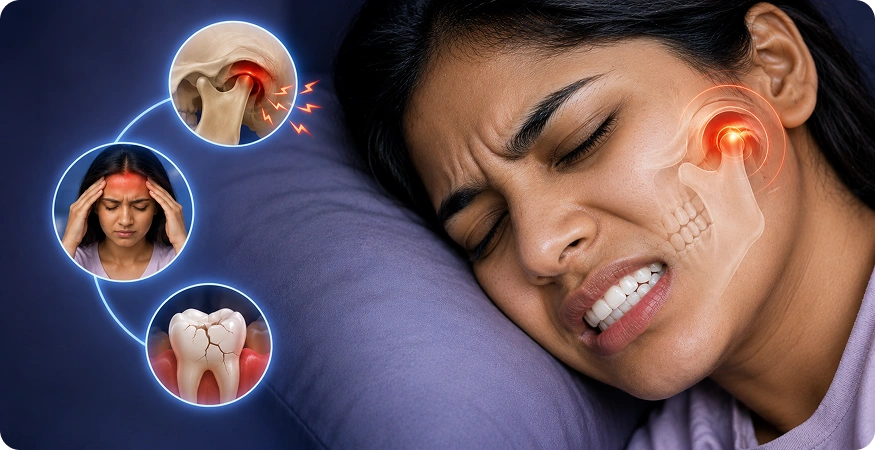
When teeth grinding becomes a nightly habit, the intense force sometimes up to 250 pounds of pressure takes a heavy toll on your jaw joint, known as the temporomandibular joint (TMJ). 

Over time, chronic bruxism can cause or worsen TMJ disorders (TMD). This leads to clicking or popping jaw sounds, locked jaw joints, and persistent facial pain. 

Living with severe bruxism and TMJ issues can become debilitating: 

  • Difficulty Chewing: Simple daily activities like eating your favourite foods become painful, as sore jaw muscles and damaged teeth make chewing agonizing. 
  • Chronic Fatigue and Pain: Interrupted sleep quality, daily tension headaches and day-time sleepiness / tiredness leave you drained, directly impacting your mood and daily productivity. 
  • Extensive Dental Work: Unmanaged grinding can fracture crowns, ruin fillings, and lead to costly restorative procedures. 

Modern Teeth Bruxism Treatment: Beyond Basic Mouthguards

Many people try over-the-counter night guards, only to find they feel bulky or worsen jaw pain. Traditional night guards act like a shield to protect tooth enamel, but they do not stop the underlying muscle spasms causing the clenching. 

To truly stop bruxism, modern neuromuscular dentistry focuses on finding your jaw’s natural, relaxed resting position. 

Precise Diagnostic Technology 

Rather than relying on guesswork, advanced clinical care utilizes precise evaluation tools:  

  1. Ultra-Low Frequency TENS (ULF-TENS): FDA-approved ULF-TENS devices deliver gentle electrical impulses to relax tense jaw and facial muscles. Relaxing hyperactive muscles helps reveal your jaw’s true, stress-free bite position.  
  2. Jaw Muscle Surface EMGs (sEMG): FDA approved equipments for Surface electromyography measures the electrical activity of your facial muscles in real time. It provides objective data on muscle tension and strain before and after treatment. 
    3.
    Computerized Jaw Tracking: FDA approved High-tech jaw tracking systems map the exact 3D movement of your jaw as it opens, closes, and rests.  

Custom Oral Sleep Appliances & Orthotics

Using data from ULF-TENS, surface EMGs, and 3D jaw tracking, custom oral sleep appliances and neuromuscular orthotics can be designed.

Unlike generic night guards, these specialized appliances hold your jaw in its ideal position throughout the night. By stabilizing the jaw and keeping the airway open, these custom devices help stop the grinding reflex, protect your teeth, relieve TMJ strain, and restore your sleep quality.

Practical Home Tips to Reduce Night Grinding

Along with professional dental care, simple daily habits can help calm hyperactive jaw muscles: 

  • Practice Jaw Relaxation: Keep your lips together and teeth apart during the day. Rest your tongue gently on the roof of your mouth behind your front teeth. 
  • Apply Warm Compresses: Hold a warm washcloth against your jaw muscles before bed to ease built-up muscle tension. 
  • Limit Evening Stimulants: Cut down on caffeine, alcohol, and heavy meals at least 4 to 6 hours before sleeping. 
  • Manage Stress: Incorporate light stretching, deep breathing exercises, or warm baths into your bedtime routine. 

Reclaim Pain-Free Sleep and Better Daily Comfort

Teeth grinding does not have to ruin your sleep or compromise your daily quality of life. If you wake up with jaw soreness, frequent headaches, or sensitive teeth, seeking professional evaluation is the first step toward lasting relief.

By addressing root causes like sleep apnoea and utilizing advanced, diagnostic-driven oral appliances, you can protect your smile, eat comfortably, and enjoy restful sleep again. Schedule a consultation with your airway dentist / TMJ dental professional to learn how precision treatment can restore your jaw health.

To treat the most complex of TMJ problems, contact us at TMJ India and get your appointment with our TMJ experts today! 

Contact us


    Our other blogs