
Can Gums Grow Back After Receding? Causes and Treatment Options
Gum recession is common, and it’s easy to miss early on. Some people notice their teeth look a little longer than they used to. Others
Published on
Maxillary expansion is a procedure that gently widens the upper jaw (maxilla) to correct a narrow palate and create more space for the teeth.
Its main goals are to improve how the upper and lower teeth fit together, relieve crowding, and support proper jaw development. In growing patients, this treatment uses the natural flexibility of the midpalatal suture to widen the upper jaw. In adults, where the suture has fused, expansion may require surgery to separate the suture before the jaw can be widened.
Maxillary expansion works by applying controlled lateral forces via a custom-made appliance placed on the upper teeth or palate. Widening the upper jaw creates space for crowded teeth and correct posterior crossbite.
Anatomically, the maxilla is made of two halves connected at the midpalatal suture.
In children and adolescents, this suture can be separated non surgically, using orthodontic forces through appliances such as hyrax expander. This process is known as rapid maxillary expansion in orthodontics.
In adults, where the midpalatal suture is fused or there is a significant transverse skeletal deficiency, surgical assistance may be required. This treatment is known as adult palatal expansion.
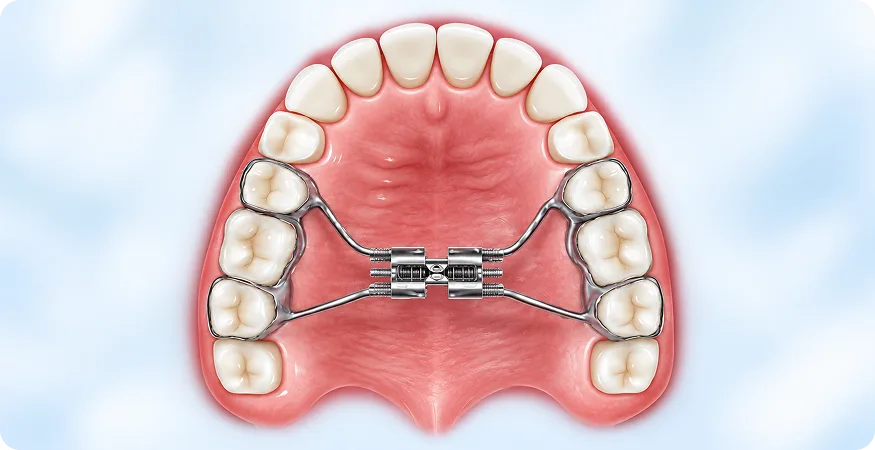
SARPE uses an orthopaedic device along with surgical cuts (osteotomies) to expand the maxilla and palatine bones.
This method is particularly useful when non-surgical techniques are not enough, especially in cases of severe transverse deficiencies or when the patient has reached skeletal maturity.
The surgeon creates a vertical osteotomy in the midline of the upper jaw and performs a Le Fort I osteotomy to aid in expansion. The patient activates the expander until the desired expansion is achieved, followed by a three month stabilization period.
The bones then fuse in the new position.
During this process, small spaces may form between the central incisors, known as “central blades,” which are corrected later during orthodontic treatment.
SARPE is an effective treatment, but it is more invasive as it involves surgery and requires postoperative care.
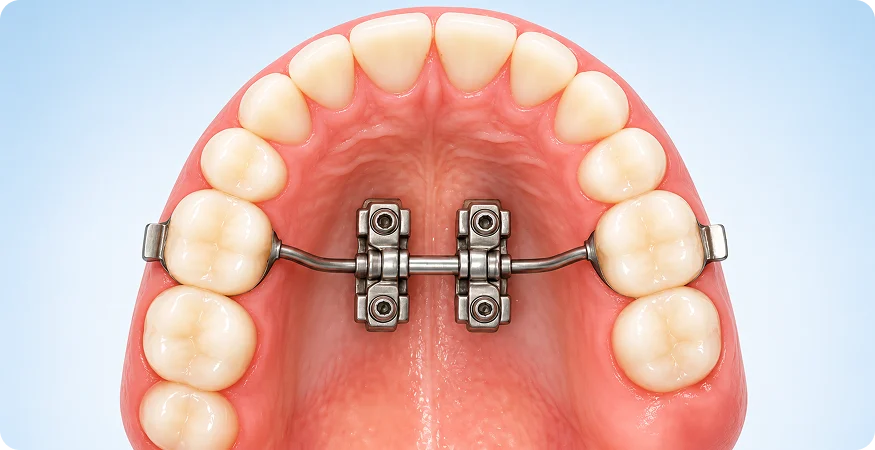
With recent advances made in implants, a technique called MARPE uses micro-implants embedded in the palate to provide skeletal support.
This allows expansion forces to be applied directly to the palate without affecting the teeth, making it a less invasive option, suitable for older patients without damaging the teeth.
Once the expander is fabricated, it is attached to the palate using guided micro-screws, based on digital planning.
The patient then activates it daily by turning the screw for about three to four weeks, as directed by the orthodontist.
As the palate expands, a small space forms between the two front upper teeth which is later closed with orthodontic treatment. At the same time, they may also experience improved nasal breathing, as the nostrils become larger due to the expansion of the palate.
The expander will stay in place until new bone forms at the suture, which usually takes between four to six months.
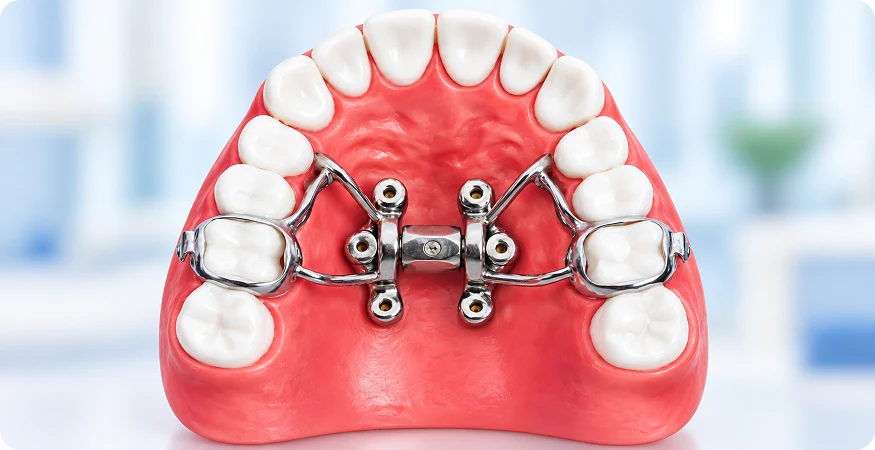
MSE is a special subtype of MARPE developed by Dr. Won Moon. It is designed to be more bone-supported, more rigid, and is engineered for greater skeletal expansion, especially in adults whose sutures have already matured.
The appliance is created using digital technology and is custom-fitted to each patient’s palate. The device consists of a main body with an expansion screw and
four slots where mini-implants are placed, along with four connecting arms that attach to the molar bands.
The benefits of using the MSE include:
By increasing the space in the dental arch, maxillary expansion can reduce overcrowding, minimize the need for tooth extraction in specific cases, and correct posterior crossbites. A better bite (occlusion) ensures that chewing forces are distributed more evenly, which supports the long-term health of the teeth and jaw joints.
In terms of facial appearance, expansion can widen the smile and improve the shape of the dental arch, which may contribute to a more balanced facial structure.
Additionally, expansion can increase the volume of the nasal cavity and reduce resistance in the nasal passages, which may improve nasal breathing.
For individuals with certain airway issues, maxillary expansion has been linked to better airflow and, in some cases, reduced symptoms of obstructive sleep apnea when used as part of a comprehensive treatment plan involving both medical and dental professionals.
The maxillary expansion process may vary from one patient to another depending on their age, jaw structure and the type of appliance used. During the initial days, patients may feel mild pressure on the teeth or palate as the expander gradually widens the upper jaw.
Some people may also notice temporary changes in speech or difficulty while eating certain foods. These effects usually improve as the mouth adjusts to the appliance.
Regular orthodontic visits are important to monitor the progress and ensure that the expansion is taking place as planned. Following the orthodontist’s instructions and maintaining good oral hygiene can also help support a smooth treatment process.
Maxillary expansion is an effective orthodontic treatment for correcting a narrow upper jaw and improving the alignment of the teeth. It can help reduce crowding and correct bite problems while creating more space in the upper dental arch. Depending on the patient’s age and skeletal maturity, treatment options such as SARPE, MARPE and MSE may be recommended.
At The right bite and TMJ Pain care helps to Choose the right method requires a proper assessment of the jaw structure and overall dental health. While maxillary expansion may also support better nasal breathing in some patients, the results can vary from person to person. Consulting with our experienced orthodontist is the best way to understand which treatment option is suitable for your needs and what results you can expect.
Contact us
Our other blogs
Can Gums Grow Back After Receding? Causes and Treatment Options
Gum recession is common, and it’s easy to miss early on. Some people notice their teeth look a little longer than they used to. Others

How to Improve Sleep Apnea: Tips for Better Sleep
Waking up tired after what should have been a full night of sleep can be incredibly frustrating. You may go to bed for eight hours,
Snoring and Dry Mouth: Causes, Connection and When to Seek Help
You wake up with a parched mouth, a sore throat and the feeling that your sleep did not do much good. Your partner, meanwhile, may
WhatsApp us