
Snoring and Dry Mouth: Causes, Connection and When to Seek Help
You wake up with a parched mouth, a sore throat and the feeling that your sleep did not do much good. Your partner, meanwhile, may
Published on
Ever caught yourself clenching your jaw at your desk, waking up with a dull headache, or biting your cheek again? You’re not alone. While teeth should fit together seamlessly, over 50% of people have a misaligned bite, known as malocclusion.
It’s rarely just a cosmetic fix. When your teeth don’t line up, your jaw muscles work overtime during basic tasks like chewing or speaking. Over time, this constant strain triggers neck tightness, facial pain, and recurring headaches.
Catching the bite of misalignment symptoms early prevents lasting pain. Here’s how a misaligned bite impacts your body and how to fix it.
Bite misalignment occurs when the upper and lower teeth do not meet in a normal, functional position. In a healthy, balanced bite, the upper front teeth sit slightly over the lower front teeth, and the cusps of your molars interlock smoothly.
When structural imbalances, genetics, lost teeth, or childhood habits shift this natural positioning, your jaw is forced into an unnatural resting angle.
Common types of bite issues include:
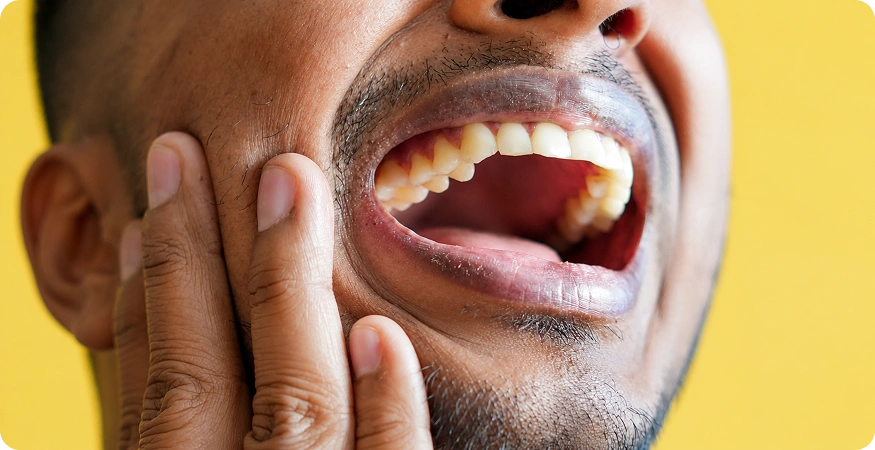
Your jaw relies on two delicate hinges located on either side of your head, known as the temporomandibular joints (TMJ). These joints, along with a network of surrounding facial muscles, allow you to chew, talk, swallow, and yawn.
When your teeth fit together incorrectly, your jaw muscle structure can never truly relax. Every time you speak or chew food, your jaw shifts out of its natural, healthy track to force the teeth into contact. This perpetual strain sends stress directly into the jaw joints, often triggering painful TMJ disorders (TMD).
Understanding bite misalignment symptoms is the first step toward getting lasting relief. Many people live with discomfort for years without realizing their teeth are the actual root cause.
Waking up with a tender, stiff jaw or experiencing dull aching throughout the day is a primary indicator. The muscles working your jaw become exhausted from constantly balancing an uneven bite.
Do you hear a distinct popping or clicking sound when you open wide to eat a sandwich? This sound occurs when the cartilage disc within the TMJ slips out of its normal position due to joint pressure.
Jaw muscle strain does not stay isolated to your face. The temporalis muscle spans across the side of your head near your temples. Continuous tension in this area frequently manifests as morning headaches or recurring migraines.
When your bite forces are distributed improperly, specific teeth absorb far more pressure than they are designed to handle. You may notice premature wear, cracked enamel, or flattened tooth surfaces.
If eating firm or chewy foods feels exhausting, or if you constantly bite your cheek, tongue, or lips while eating, your arches are likely misaligned.
The TMJ sits directly adjacent to your ear canals. Severe inflammation in the jaw joint can radiate into the ear, causing phantom earaches, a feeling of ear fullness, or ringing in the ears.
An unstable bite often prompts your brain to try to “grind down” high spots on teeth automatically, leading to severe night grinding.
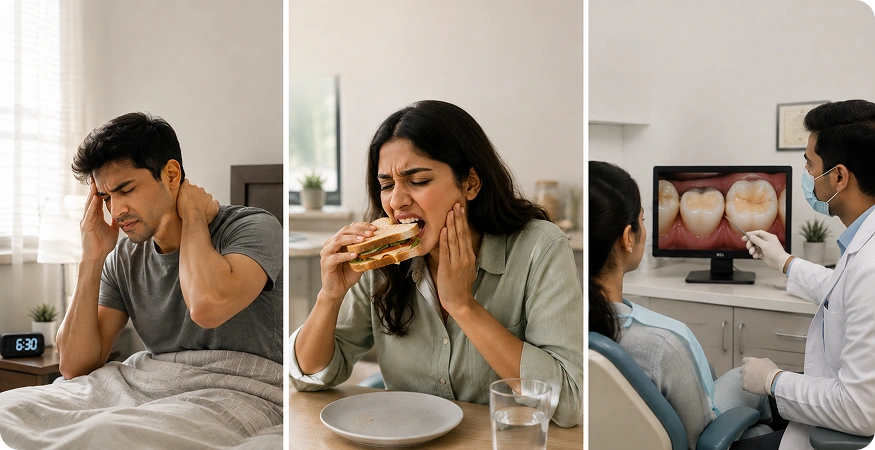
To understand how bite misalignment symptoms show up in everyday situations, consider these common real-world examples:
| Cause | Description |
|---|---|
| Genetics | Naturally inheriting a small upper jaw and large lower teeth, or vice versa, creates tooth space problems. |
| Childhood Oral Habits | Prolonged thumb sucking, pacifier use past age four, or tongue thrusting shapes how growing jaw bones develop. |
| Tooth Loss or Unreplaced Extractions | When a tooth is lost, surrounding teeth gradually drift into the open space, changing how the arches mesh together. |
| Facial Trauma or Injury | A broken jaw or hit to the face can permanently shift the alignment of the jaw joint. |
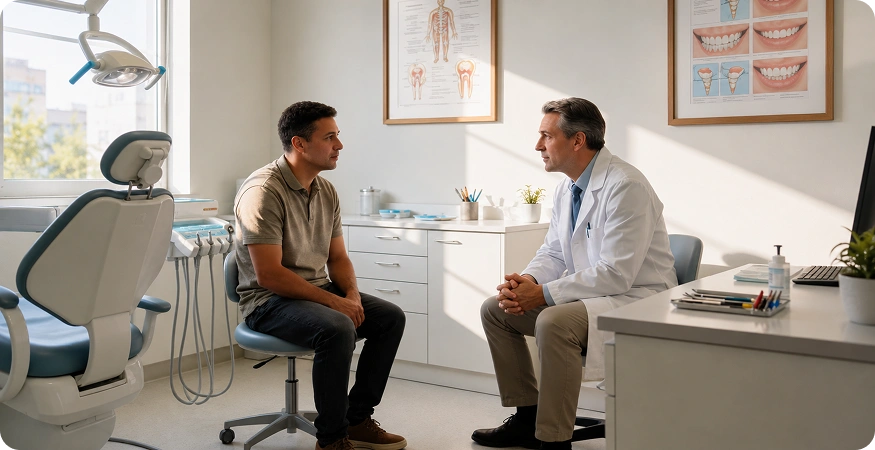
If you recognize multiple bite misalignment symptoms, consult a dentist, orthodontist, or TMJ specialist. They will perform a comprehensive physical exam, check your range of motion, evaluate tooth wear, and take digital 3D scans or X-rays to assess your jaw alignment.
Treatment options vary based on severity:
Orthodontic Care
Modern braces or clear aligners slowly move teeth into proper positions, correcting structural imbalances and eliminating pressure on the jaw.
Bite Adjustments (Equilibration)
In minor cases, a dentist carefully reshapes minor high points on tooth enamel so all teeth meet evenly at once.
Night Guards and Splints
Custom-fitted mouthguards protect your enamel from damage caused by night grinding and take pressure off inflamed joints.
Restorative Dental Work
Replacing missing teeth with implants or crowns rebuilds a stable, balanced chewing surface. If you are experiencing jaw discomfort and want to evaluate your tooth alignment, schedule a comprehensive checkup with an expert dental provider to find personalized treatment solutions.
Recognizing bite misalignment symptoms early can help prevent ongoing jaw discomfort and reduce the strain placed on your teeth, jaw muscles and temporomandibular joints. Signs such as uneven tooth contact, difficulty chewing, frequent jaw tension, headaches, tooth wear or discomfort when opening and closing the mouth should not be ignored, particularly when they occur regularly.
Your bite plays an important role in how your jaw functions every day. If you have noticed bite misalignment symptoms or experience recurring jaw pain, stiffness or discomfort while chewing, At The Right Bite Sleep and TMJ Pain Care we can help you understand the connection between your bite, jaw function and overall comfort.
Schedule a professional consultation today to have your bite and jaw health evaluated and take the right step towards a more balanced, comfortable bite.
No. Dental alignment and jaw bone structures do not self-correct once adult teeth and jaw structures are fully developed. Left untreated, bite misalignment symptoms typically worsen as tooth enamel wears down further.
Yes. The muscles in your jaw connect directly to muscles in your neck, shoulders, and upper spine. Strain in your jaw muscles can trigger compensatory muscle tension throughout your neck and upper back.
Bite-related headaches often feel like a tight band or dull ache around your temples, jaw, or behind the eyes. They are frequently accompanied by jaw clicking, facial stiffness, or muscle soreness upon waking up.
In many cases, yes. Clear aligners can reposition misaligned teeth, allowing the jaw to rest naturally and alleviating joint strain. Severe skeletal bite issues may require specialized orthodontic appliances.
A night guard does not permanently shift your teeth back into place. It acts as a protective cushion that shields your enamel and reduces stress on your jaw joints while you sleep. True correction requires orthodontic or restorative dental treatments.
Contact us
Our other blogs
Snoring and Dry Mouth: Causes, Connection and When to Seek Help
You wake up with a parched mouth, a sore throat and the feeling that your sleep did not do much good. Your partner, meanwhile, may

How to Improve Sleep: Simple Tips to Sleep Better and Wake Up Refreshed
Home > Blogs > How to Improve Sleep: Simple Tips to Sleep Better and Wake Up Refreshed How to Improve Sleep: Simple Tips to Sleep
Sports Mouth Guard vs Dental Mouth Guard: Key Differences
A mouthguard can look like a simple piece of plastic, but choosing the wrong type can leave your teeth, jaw, and dental work inadequately protected.
WhatsApp us