

How to Improve Sleep Apnea: Tips for Better Sleep
Waking up tired after what should have been a full night of sleep can be incredibly frustrating. You may go to bed for eight hours,
Published on
Migraines often stop feeling like random episodes once they start repeating. You begin to notice patterns, certain days, certain triggers, and a familiar kind of pressure that builds before the pain fully sets in. It is no longer just about pain relief, it becomes about understanding what is setting it off in the first place.
Many people at this stage start connecting lifestyle factors they earlier ignored. Long screen hours, poor posture, stress buildup, and even jaw tightness can quietly add to the frequency and intensity of episodes.
Alongside medical care, exercises for migraine relief are often explored as a supportive step. They are not a cure, but they may help the body release tension that contributes to recurring discomfort.
Migraine is a neurological disorder where the brain becomes hypersensitive to pain signals and not a regular headache. This heightened sensitivity in the central nervous system can cause moderate to severe throbbing head pain, often with nausea, vomiting, and sensitivity to light (photophobia) and sound (phonophobia). Episodes can last for hours or even days.
Migraine does not have a single fixed cause. It usually happens when certain internal or external factors trigger the brain’s pain response.
Common migraine triggers include:
Triggers vary individually, so identifying personal patterns is more effective than general assumptions.
Migraines are often linked to changes in brain chemistry, hormones, stress, sleep deprivation, and environmental triggers. However, recurring migraines may sometimes be associated with underlying issues such as TMJ disorders or bite misalignment.
While medications can provide temporary relief, identifying and treating the root cause is essential for long-term management. Along with professional treatment, specific exercises may help reduce the frequency and intensity of migraine episodes. However, these exercises should be considered supportive measures and not a replacement for proper diagnosis and treatment.
If your migraines persist, consult a migraine specialist to determine whether TMJ or bite-related issues may be contributing to your symptoms.
You can either self-massage or go to a massage therapist for your migraine pain. Gently squeeze the tip of the fingers on your scalp, in the temple and forehead region where your head pain is prominent and move them in a clockwise direction. Next, you can massage the bridge of your nose, the cheek line and jaw bones as they are effective exercise for migraine relief.
Ensure to sit or stand in a peaceful and upright position, keeping your head straight and squeezing your shoulder blades gently upwards. Relax and let go off the hold and bring the shoulders down by exhaling gently. Hold in the relaxed position for 1 or 2 seconds and repeat the later shoulder depression exercise for 10 to 15 times, concentrating on your breath.
A simple yet effective type of exercise for migraine relief, the chin tuck are simple neck and shoulder workout to reduce your head pain. You can do this exercise while sitting or standing, as per your convenience. Look straight for a second, and move your neck towards your chin, making a double chin and hold there for 2 seconds before coming back to the rest position of looking forward. Repeat 10 to 15 times.
Move your temporomandibular joint, the one that connects your lower jaw to the skull in gentle movements. This relieves your muscles and joints that go all the way to your head, giving you a breather with headache exercise relief. Slowly moving the jaw up and down, from and back and side-to-side can activate your muscles and relieve the tension and pain. Repeat 10 to 15 times.
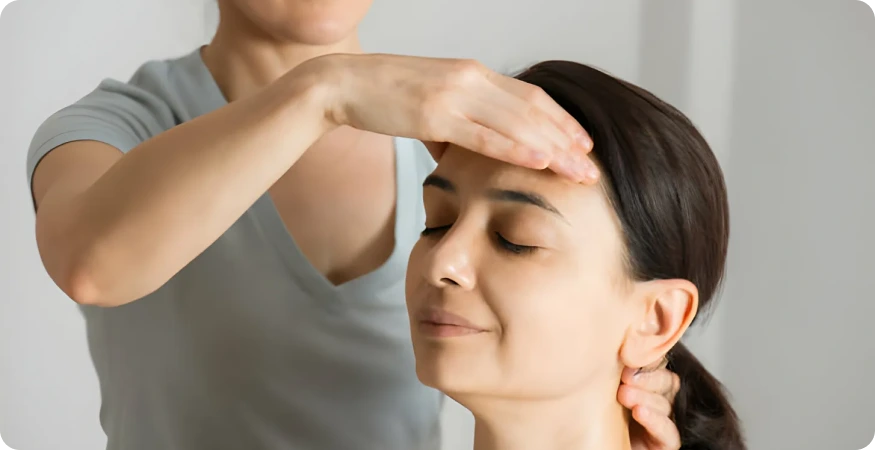
Exercises don’t treat migraine, but they can help reduce physical tension that may worsen headache discomfort.
Key benefits include:
Ensure that your surroundings are calm, where you sit to do your migraine relief exercise, as it affects the quality of your workout and gives you maximum outcome. Ensure you sit in a dimly lit, aerated space, along with relaxing music to set you in a relaxed mood. If you are facing a migraine headache episode, keep a hot or cold compress whichever works best for you, on your head and neck. This will relax your tensed muscles and allow the blood flow to easily pass through.
Sometimes, you get migraine along with other problems like acidity or bloating if you skip meals or have them at irregular time intervals. For this, ensure to have meals at regular intervals, eat healthy food like fresh fruits and salad, avoid excess caffeinated drinks and other food items that may trigger your head pain. Eating light will also help during your migraine relief exercise routine, as it helps your migraine come down faster.
Try to maintain a consistent sleep schedule because irregular or poor sleep can increase headache frequency in many individuals. A rested body responds better to relaxation exercises.
Follow the exercises for migraine pain and breathing exercises for migraine headaches as you follow a walking or a gym routine, for it will help you reduce the effects of migraine, while you have an episode. Along with this, the medication will work best as there is a holistic approach to treating head pain.
By saying manage your lifestyle, it is mainly managing your stress, as it is the underlying cause of all the problems you face in your current lifestyle conditions. A work-life balance is very important in today’s work and career scenario and taking regular breaks and taking care of your body, mind and soul will definitely help.
Ensure to drink plenty of water to keep your body hydrated. This increases oxygen levels, circulation and up your energy levels to fight the symptoms of headaches. You can pair this with regular migraine workout to help further. If you forget to drink water in your busy schedule, ensure to keep a bottle with you and take small sips every now and then.

The temporomandibular joint (TMJ) connects the jaw to the skull and controls chewing, speaking, and yawning. It works closely with surrounding jaw, facial, and neck muscles. This area is linked to the trigeminal nerve, which carries pain signals from the head and face.
Because of this connection, TMJ dysfunction can cause referred pain in the temples, forehead, ears, and neck. It’s often seen in people with bruxism (teeth grinding) or chronic jaw clenching, especially during stress or sleep.
Common TMJ-related signs include:
TMJ pain can mimic headache or migraine symptoms, but not all headaches are TMJ-related. A proper clinical evaluation is needed to identify the exact cause.
If headaches become frequent, severe, or begin affecting daily life, professional evaluation is important.
Warning signs include:
These symptoms may require proper diagnosis to rule out underlying conditions and guide treatment correctly.
Migraine is a neurological condition influenced by multiple internal and external triggers, and its symptoms can vary widely from person to person. While lifestyle changes and exercises may improve daily comfort, they work best as part of a broader, structured care approach rather than as a standalone solution.
Exercises for migraine relief may help reduce muscle tension in the neck, shoulders, and jaw when followed consistently with proper guidance. If headaches persist, The Right Bite Sleep and TMJ Pain Care offers migraine specialists and TMJ evaluation to identify underlying causes and provide targeted treatment for long-term relief.
FAQs
If your headaches are still recurring, it’s better not to manage them on your own. You can consult migraine specialists at The Right Bite Sleep and TMJ Pain Care to understand the root cause and get a treatment plan tailored to you.
You can do these exercises daily for about 5 to 10 minutes, especially when symptoms start or during stressful days. Keeping it consistent matters more than doing it for long hours, as your body responds better to regular, gentle practice.
Yes, in some people, jaw clenching or TMJ issues can add to head or temple pain that feels like migraine. Getting a proper evaluation helps you understand if jaw tension is contributing and guides the right treatment approach.
Contact us
Our other blogs
How to Improve Sleep Apnea: Tips for Better Sleep
Waking up tired after what should have been a full night of sleep can be incredibly frustrating. You may go to bed for eight hours,
Snoring and Dry Mouth: Causes, Connection and When to Seek Help
You wake up with a parched mouth, a sore throat and the feeling that your sleep did not do much good. Your partner, meanwhile, may

How to Improve Sleep: Simple Tips to Sleep Better and Wake Up Refreshed
You can spend eight hours in bed and still wake up feeling like you have barely slept. Your alarm rings, you hit snooze, then finally
WhatsApp us