Snoring and Dry Mouth: Causes, Connection and When to Seek Help
You wake up with a parched mouth, a sore throat and the feeling that your sleep did not do much good. Your partner, meanwhile, may

Table of contents
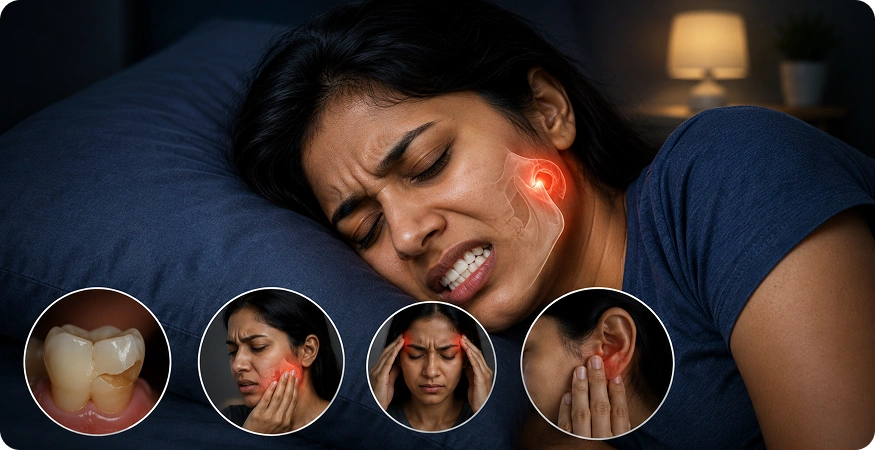
Bruxism is involuntary teeth grinding or jaw clenching that can happen while you are awake or asleep. Sleep bruxism can be difficult to notice because it happens unconsciously, but signs may include morning jaw soreness, headaches, tooth sensitivity or worn, chipped or cracked teeth. NIDCR
If you are wondering how to stop bruxism at night, there is no single solution that works for everyone. Treatment focuses on identifying contributing factors, protecting the teeth, reducing jaw strain and addressing related sleep or medical conditions when necessary.
Sleep bruxism does not always have one identifiable cause. Several factors may be associated with grinding or clenching, including:
Some people with sleep bruxism also have sleep disorders such as obstructive sleep apnea. This does not mean sleep apnea causes every case of grinding, but significant snoring, breathing pauses or daytime sleepiness may warrant further sleep evaluation. NIDCR
Sleep bruxism rarely happens in a vacuum. It is usually triggered by a combination of physical, psychological, and lifestyle factors:
One of the most significant causes of sleep bruxism is Obstructive Sleep Apnoea (OSA).
When your airway collapses during sleep, your brain senses a drop in oxygen levels. In a micro-arousal reflex, the body tightens the jaw muscles to push the tongue forward and reopen the airway. If you frequently grind your teeth, snore loudly, or wake up gasping for air, your body may be instinctively fighting to breathe. Addressing underlying sleep breathing issues is often the missing piece in stopping night grinding.
Common Symptoms of Nighttime Teeth Grinding
Because bruxism happens while you sleep, many people do not realize they do it until damage appears. Common warning signs include:
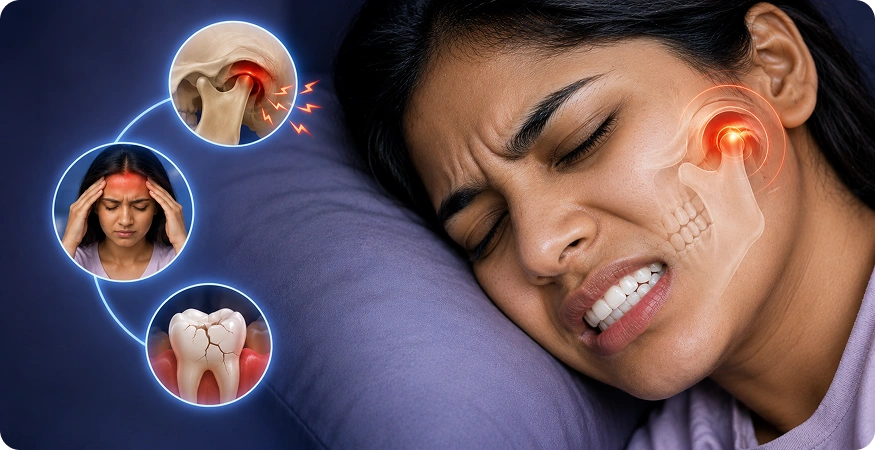
When teeth grinding becomes a nightly habit, the intense force sometimes up to 250 pounds of pressure takes a heavy toll on your jaw joint, known as the temporomandibular joint (TMJ).
Over time, chronic bruxism can cause or worsen TMJ disorders (TMD). This leads to clicking or popping jaw sounds, locked jaw joints, and persistent facial pain.
Living with severe bruxism and TMJ issues can become debilitating:
Many people try over-the-counter night guards, only to find they feel bulky or worsen jaw pain. Traditional night guards act like a shield to protect tooth enamel, but they do not stop the underlying muscle spasms causing the clenching.
To truly stop bruxism, modern neuromuscular dentistry focuses on finding your jaw’s natural, relaxed resting position.
Precise Diagnostic Technology
Rather than relying on guesswork, advanced clinical care utilizes precise evaluation tools:
Using data from ULF-TENS, surface EMGs, and 3D jaw tracking, custom oral sleep appliances and neuromuscular orthotics can be designed.
Unlike generic night guards, these specialized appliances hold your jaw in its ideal position throughout the night. By stabilizing the jaw and keeping the airway open, these custom devices help stop the grinding reflex, protect your teeth, relieve TMJ strain, and restore your sleep quality.
You cannot consciously control your jaw throughout the night, but several steps may help reduce contributing factors and protect against damage.
Aim for a consistent bedtime and wake time and give yourself enough opportunity for restorative sleep. Addressing poor sleep may be particularly important when bruxism occurs alongside another sleep problem.
Coffee, tea, energy drinks and other caffeine-containing products later in the day may contribute to sleep disruption and bruxism in some people.
Alcohol is associated with bruxism and can also affect sleep quality. Reducing evening alcohol intake may help some people. NIDCR
Smoking is another factor associated with bruxism. Reducing or stopping tobacco use can benefit both oral and overall health.
Relaxation techniques such as meditation, controlled breathing, gentle exercise or other calming routines may help when stress contributes to clenching or grinding.
A dentist can look for worn enamel, chipped or cracked teeth, tenderness in the jaw muscles and other signs of bruxism. Regular dental examinations are particularly useful because you may not realise you grind your teeth while sleeping.
Sleep bruxism and sleep disorders can occur together. People who grind or clench during sleep may also experience snoring or obstructive sleep apnea.
Further sleep evaluation may be appropriate if night grinding occurs together with:
When a major sleep problem is suspected, a healthcare professional may recommend assessment by a sleep medicine specialist. A sleep study can also evaluate sleep-related conditions and detect muscle activity associated with nighttime grinding.
Arrange a dental evaluation if:
A sleep medicine assessment may also be appropriate if grinding occurs with loud snoring, breathing pauses, gasping or significant daytime sleepiness.
Teeth grinding does not have to ruin your sleep or compromise your daily quality of life. If you wake up with jaw soreness, frequent headaches, or sensitive teeth, seeking professional evaluation is the first step toward lasting relief.
By addressing root causes like sleep apnoea and utilizing advanced, diagnostic-driven oral appliances, you can protect your smile, eat comfortably, and enjoy restful sleep again. Schedule a consultation with your airway dentist / TMJ dental professional to learn how precision treatment can restore your jaw health.
Contact us
Our other blogs

Snoring and Dry Mouth: Causes, Connection and When to Seek Help
You wake up with a parched mouth, a sore throat and the feeling that your sleep did not do much good. Your partner, meanwhile, may

How to Improve Sleep: Simple Tips to Sleep Better and Wake Up Refreshed
You can spend eight hours in bed and still wake up feeling like you have barely slept. Your alarm rings, you hit snooze, then finally
Sports Mouth Guard vs Dental Mouth Guard: Key Differences
A mouthguard can look like a simple piece of plastic, but choosing the wrong type can leave your teeth, jaw, and dental work inadequately protected.
WhatsApp us