

Maxillary expansion is a procedure that gently widens the upper jaw (maxilla) to correct a narrow palate and create more space for the teeth.
Published on
Table of contents
Waking up with a painfully dry mouth, a scratchy throat, bad breath, or the feeling that you barely slept can be frustrating, especially when you spend seven or eight hours in bed. If this happens regularly, the problem may not simply be “poor sleep.” The way you breathe during the night can also matter.
Mouth breathing often happens when air cannot move comfortably through the nose because of congestion, allergies, structural problems, or sleep-related breathing disorders. It can contribute to snoring, dry mouth, disturbed sleep, and daytime tiredness.
Sleep-disordered breathing is also widespread. A 2026 report on sleep medicine in India notes an estimated population prevalence of 11% for obstructive sleep apnea (OSA), highlighting why persistent nighttime breathing symptoms deserve attention.
So, what are the effects of mouth breathing at night, and when should you take them seriously?
Mouth breathing means inhaling and exhaling primarily through the mouth instead of the nose.
Occasional mouth breathing is not necessarily a problem. For example, if you have a cold and your nose is blocked, your body naturally finds another route for airflow. The concern arises when mouth breathing becomes a regular nighttime pattern.
During healthy nasal breathing, the nose helps filter, warm and humidify incoming air. When you sleep with your mouth open, you bypass many of these functions. The result can be an uncomfortable dry mouth and throat by morning.
More importantly, persistent mouth breathing can sometimes be a sign that something is making nasal breathing difficult, or that an underlying sleep-related breathing problem needs attention.
Why would someone naturally switch from nose breathing to mouth breathing while asleep? Several factors can contribute.
A blocked nose is one of the most straightforward causes. Allergic rhinitis, colds, sinus inflammation and other nasal conditions can make it difficult to breathe comfortably through the nose.
If your nose becomes congested when you lie down, you may unconsciously open your mouth to maintain airflow.
The septum separates the two sides of the nose. If it is significantly deviated, one or both nasal passages may become narrower.
A person may compensate by breathing through their mouth, particularly during sleep when airway muscles relax.
Turbinates help humidify and filter air, but swelling can narrow the nasal airway. Nasal polyps can also interfere with airflow. Both may encourage nighttime mouth breathing.
Mouth breathing and snoring can occur together. In some people, nighttime mouth breathing may be associated with obstructive sleep apnea, a condition in which the upper airway repeatedly becomes blocked during sleep.
That does not mean everyone who mouth-breathes has sleep apnea. However, loud snoring, gasping, witnessed breathing pauses, repeated awakenings and significant daytime sleepiness should not be ignored.
Sleeping on your back can contribute to airway narrowing in some people. The position of the tongue, jaw, soft palate and other structures can also influence nighttime airflow. This is one reason breathing patterns can differ significantly from person to person.
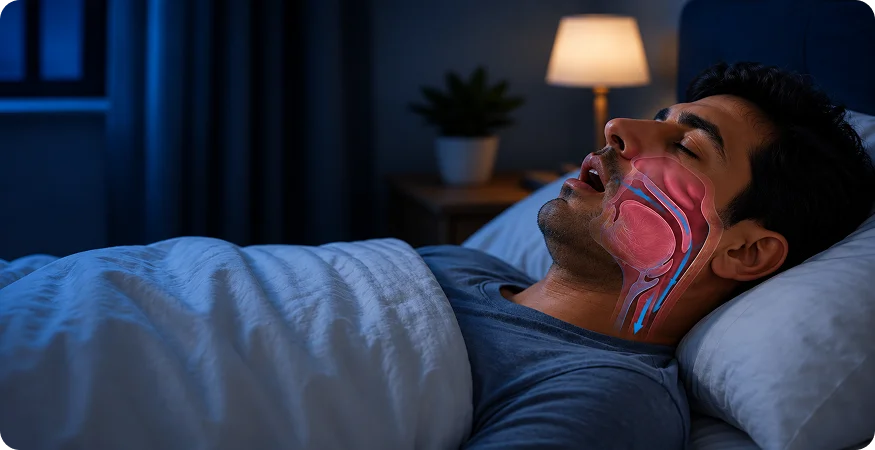
You may not realize you are mouth breathing because, well, you’re asleep! Often, someone else notices it first. A partner may hear loud breathing or snoring, while you notice the effects the next morning. Common signs include:
A Simple Morning Clue
Imagine going to bed feeling perfectly comfortable but waking up with a mouth that feels as though you have spent the night breathing desert air. That recurring pattern can be a useful clue.
It doesn’t prove that you were mouth breathing, but if it happens alongside snoring, nasal congestion or daytime fatigue, it is worth discussing with a healthcare professional.

The biggest concern isn’t simply waking up with a dry mouth. It is what nighttime breathing patterns can do to the quality of your sleep.
When airflow passes through a narrowed or partially obstructed upper airway, surrounding tissues can vibrate, producing the familiar sound of snoring.
Occasional snoring is common. However, loud or persistent snoring, especially when accompanied by breathing pauses or gasping, can be a warning sign of obstructive sleep apnea.
Saliva protects and lubricates the mouth. Constant airflow through an open mouth can dry oral tissues, potentially contributing to bad breath and oral discomfort.
Chronic dry mouth can also create an environment that is less favorable for oral health because saliva plays an important protective role for teeth and gums.
If mouth breathing is occurring because the airway is restricted, you may experience repeated changes in breathing or brief awakenings. You might not remember these awakenings the next morning. Yet the sleep can still feel unrefreshing.
Sleep apnea, for example, can repeatedly interrupt sleep when the brain briefly arouses the person to restore breathing.
Have you ever slept for eight hours but felt like you needed another eight?
Poor-quality sleep can contribute to daytime fatigue, sleepiness, irritability and difficulty concentrating. If mouth breathing is occurring alongside a sleep-related breathing disorder, treating the underlying problem may be more important than simply trying to keep your mouth closed.
There is an important connection between nasal airflow and the upper airway. An international consensus statement on obstructive sleep apnea reports that airway resistance during sleep can be higher with mouth breathing than with nasal breathing and cites research associating mouth breathing during sleep with up to 2.5 times higher airway resistance.
This doesn’t mean that every person who breathes through their mouth will develop sleep apnea. Instead, it illustrates why persistent nasal obstruction and nighttime breathing patterns deserve proper evaluation.
The goal should not simply be to force nasal breathing. The underlying reason for mouth breathing needs to be understood first.
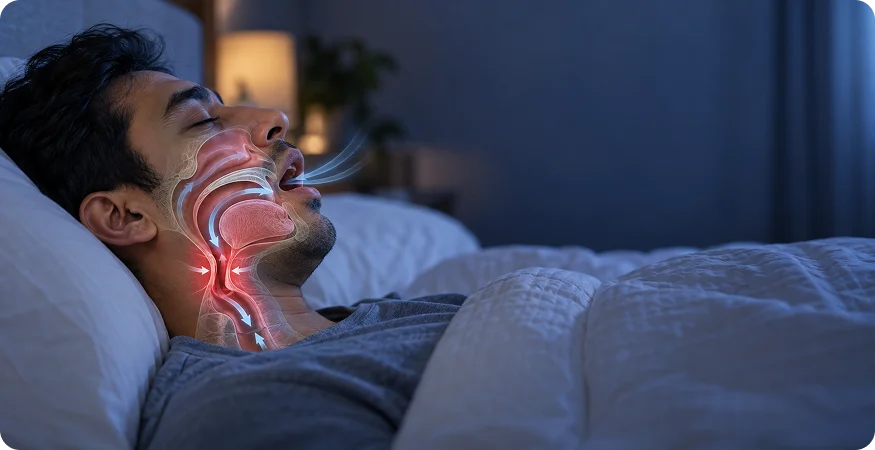
Occasional mouth breathing during a cold usually isn’t a reason to panic. But consider speaking with a healthcare professional if you regularly experience:
Sleep apnea can occur even without obvious snoring, so the absence of loud snoring doesn’t completely rule it out.
Depending on your symptoms, a healthcare professional may evaluate your nose, throat and airway and determine whether additional testing, such as a sleep study, is appropriate.
If allergies or nasal inflammation are responsible, treating the underlying nasal problem may improve airflow. Structural issues such as a deviated septum may require assessment by an appropriate specialist.
For people with suspected sleep apnea, the focus should be on diagnosing and treating the sleep-related breathing disorder rather than simply masking the symptom.
Some people may also benefit from approaches involving oral or facial muscle function. Orofacial myofunctional therapy, for example, may be used in selected cases involving mouth breathing and certain sleep-related breathing disorders.
What About Mouth Taping?
Mouth taping is often promoted online as a way to encourage nasal breathing during sleep. However, it isn’t appropriate for everyone, particularly people who have significant nasal obstruction or an undiagnosed breathing disorder.
Before trying anything that restricts your ability to breathe through your mouth, it is sensible to understand why you’re mouth breathing in the first place.
Mouth breathing at night can seem like a small annoyance. A little dry mouth here, some snoring there, what’s the big deal?
But persistent symptoms can sometimes point toward nasal obstruction, airway problems or sleep-disordered breathing.
The effects of mouth breathing at night can range from dry mouth and morning discomfort to disrupted sleep and daytime fatigue. The key is to identify the underlying cause rather than treating nighttime mouth breathing as an isolated habit.
If nighttime breathing problems are also accompanied by jaw pain, jaw stiffness, headaches or other TMJ-related symptoms, it may be worth getting a professional evaluation.
The Right Bite Sleep and TMJ Pain Care focused on non-surgical treatment for TMJ disorders, migraines and sleep-related breathing disorders. Book a consultation to understand your symptoms and explore appropriate treatment options.
Contact us
Our other blogs
Maxillary expansion is a procedure that gently widens the upper jaw (maxilla) to correct a narrow palate and create more space for the teeth.

Can Gums Grow Back After Receding? Causes and Treatment Options
Gum recession is common, and it’s easy to miss early on. Some people notice their teeth look a little longer than they used to. Others
Can Teeth Grinding Cause Tension Headaches? Causes & Symptoms
You wake up with a dull headache, a tight jaw, and a strange feeling that your face has been working all night. You take a
WhatsApp us