
Snoring and Dry Mouth: Causes, Connection and When to Seek Help
You wake up with a parched mouth, a sore throat and the feeling that your sleep did not do much good. Your partner, meanwhile, may
Published on
Table of contents
A mouthguard can look like a simple piece of plastic, but choosing the wrong type can leave your teeth, jaw, and dental work inadequately protected. A sports player needs protection against sudden impact. Someone who clenches or grinds their teeth at night needs something designed for very different forces and habits. Using one appliance for the wrong purpose is not always a sensible shortcut.
The need for proper protection is clear. A systematic review found dental trauma prevalence of around 7.5% to 7.75% among athletes wearing mouthguards, compared with 48.31% to 59.48% among those who did not. The review concluded that mouthguard users were 82% to 93% less likely to experience dentofacial injuries.
So, what is the difference between a sports mouthguard and a dental mouthguard, and when should each one be used?
A sports mouthguard is a protective device designed to absorb and distribute forces generated by impact. It sits over the teeth and helps reduce the risk of chipped, fractured, displaced, or knocked-out teeth. It can also protect the lips, cheeks, and gums from being cut against the teeth.
Sports mouthguards are particularly relevant for activities involving player-to-player contact, falls, or equipment impact. Football, boxing, hockey, rugby, basketball, wrestling, and martial arts are obvious examples. However, even activities that are not traditionally considered contact sports can create dental injury risks. The American Dental Association notes that athletes can experience dental trauma during activities such as gymnastics and skating.
The important point is that a sports guard is engineered around impact protection.
It needs to stay securely in position while the wearer moves, talks, breathes, and receives sudden force. A properly fitted guard should not constantly need to be bitten down to keep it in place.
Sports mouthguards generally fall into three categories:
For someone playing a high-impact sport regularly, fit is not a minor comfort issue. A loose guard can shift, interfere with breathing or speaking, and provide less reliable protection.
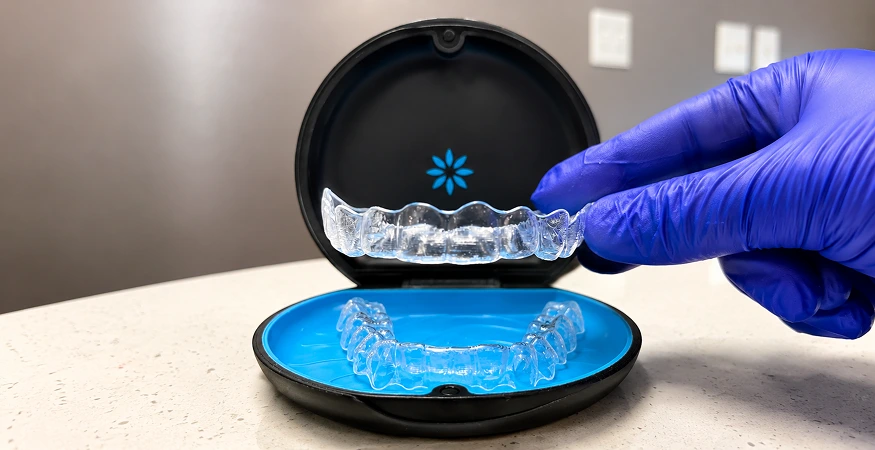
A dental mouthguard usually refers to an occlusal guard or night guard prescribed to protect teeth from clenching and grinding, medically known as bruxism.
Instead of protecting against an external collision, it manages forces created inside the mouth.
During sleep, someone may repeatedly clench their jaw or grind their teeth without being aware of it. Over time, that pressure can contribute to tooth wear, sensitivity, chipped restorations, morning jaw soreness,, and muscle fatigue.
A dental guard creates a protective barrier between the upper and lower teeth. Depending on the individual’s condition and appliance design, it can help reduce direct tooth-to-tooth contact and protect dental surfaces from excessive wear.
Some people also experience symptoms associated with the temporomandibular joint, or TMJ, such as jaw tenderness, facial muscle discomfort, or morning stiffness.
A properly assessed dental appliance may form part of a broader management plan, but a mouthguard should not automatically be assumed to treat every TMJ problem. Cleveland Clinic distinguishes grinding guards from sports guards because their purposes are fundamentally different.
| Feature | Sports Mouth Guard | Dental Mouth Guard |
|---|---|---|
| Primary purpose | Protect against impact | Protect against clenching and grinding. |
| Main force | Sudden external impact | Repetitive biting and muscle forces |
| Typical use | During sport | Usually during sleep |
| Protection | Teeth, gums, lips and oral tissues | Mainly teeth and occlusal surfaces |
| Design priority | Shock absorption and retention | Occlusal protection and controlled contact |
| Common users | Athletes | People with bruxism or tooth wear |
| Fit | Secure during movement | Precise fit for the individual’s bite |
| Assessment | Sport, age and dental anatomy | Bite, symptoms, tooth wear, and jaw function |
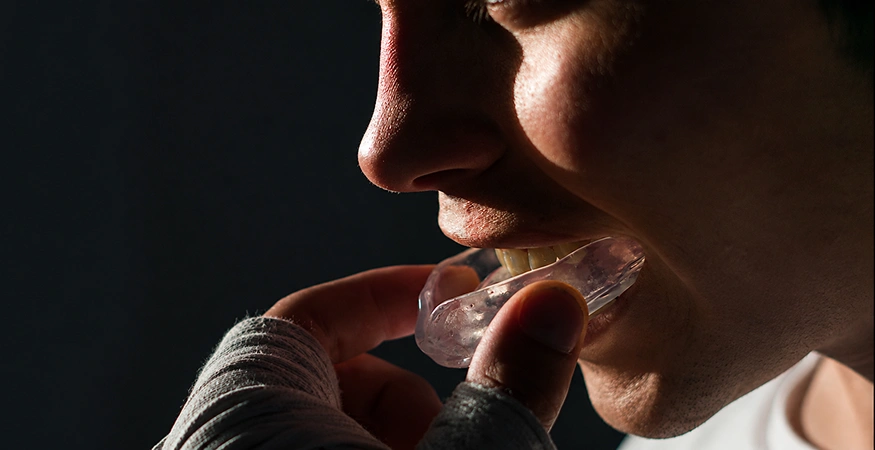
It is tempting to think that any thick mouthguard can work overnight. It is not that simple.
A sports mouthguard is designed around external trauma, not necessarily around the wearer’s bite or long-term grinding pattern. Wearing an unsuitable appliance for extended periods may create discomfort, interfere with normal jaw function or simply fail to address the reason the dental appliance was needed in the first place.
Likewise, a thin dental night guard is not automatically an appropriate replacement for sports protection.
If someone plays rugby in the afternoon and grinds their teeth at night, they may need two different appliances, each designed for its specific purpose.
Two mouthguards can look almost identical but perform very differently. A well-fitted sports guard should remain stable without excessive clenching. The wearer should be able to breathe and communicate without constantly adjusting it. Poor retention can become particularly problematic during fast movement or impact.
For dental guards, the fit is equally important but for another reason. The appliance interacts with the person’s occlusion, or the way their upper and lower teeth meet. A dentist can assess tooth wear, existing restorations, bite relationships, and symptoms before deciding what type of appliance is appropriate.
The latest international guidance describes custom mouthguards as being produced from an individual’s dental impression, mold, or digital scan. Modern workflows can also use 3D-printed models to create a more precise appliance.
The consequences depend on how and why the appliance is being used.
For an athlete, an unsuitable guard may be loose, uncomfortable, or difficult to breathe and speak with. It may also provide less dependable protection during an impact.
For someone with bruxism, using a generic sports guard may not provide the specific occlusal design required for their teeth and jaw. It may also be unnecessarily bulky for overnight use.
There is another important consideration: orthodontic treatment and dental restorations.
Braces, crowns, bridges, implants, and other dental work can affect how an appliance should be designed. Sports mouthguards may need additional space around orthodontic appliances, while a dental guard may need to account for changing tooth positions or existing restorations.
This is why a dentist should assess the mouth before prescribing a custom appliance, particularly when there is ongoing pain, significant tooth wear, or complex dental work.
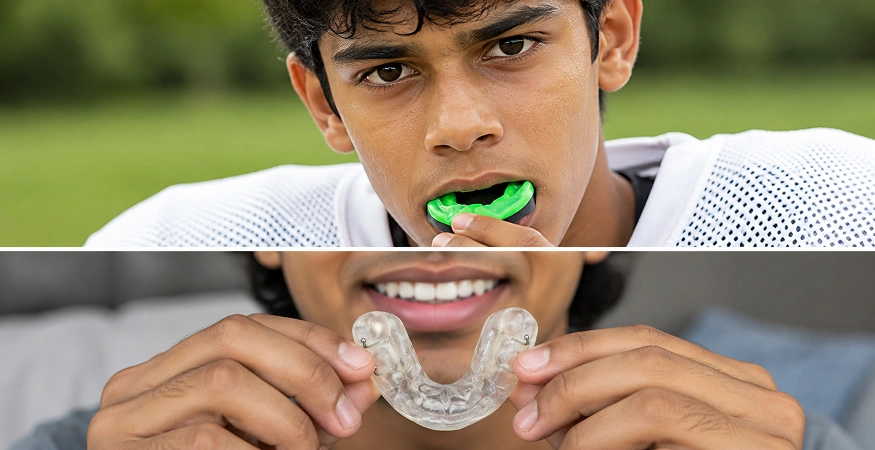
The answer depends on why you need it.
If both situations apply, do not assume one appliance can perform both jobs effectively. A dental professional can determine whether separate appliances are appropriate.
The difference between sports mouthguards and dental mouthguards ultimately comes down to purpose, force, and design. One is built to manage sudden external trauma; the other is designed around repetitive jaw forces and tooth protection.
The right mouthguard is not simply the one that feels comfortable when you first put it in. It should be appropriate for the activity, fit securely, and match the reason you need protection.
If you are dealing with morning jaw discomfort, teeth grinding, bite concerns, or TMJ-related symptoms, speak with a dental professional before choosing a guard yourself.
At The Right Bite Sleep and TMJ Pain Care, professional assessment can help identify the underlying issue and determine whether an appropriate dental appliance should form part of your care plan. Protecting your teeth is important, but protecting the way your teeth and jaw function together matters just as much.
No. A sports mouthguard is designed primarily for impact protection, while a dental night guard is generally used to protect teeth from clenching and grinding.
Not automatically. A dental guard may not provide the impact protection, retention, or shock-absorbing characteristics required for sport.
Custom mouthguards generally provide a more precise fit and better retention. Professional guidelines identify custom-made guards as the most comfortable and protective type.
A dental mouthguard can protect teeth from the damaging effects of grinding and clenching, but it does not necessarily eliminate the underlying cause of bruxism.
Yes. Persistent jaw pain, tooth wear, morning stiffness, or bite changes deserve professional assessment before selecting an appliance. The appropriate guard depends on your teeth, bite, symptoms, and individual needs.
Contact us
Our other blogs
Snoring and Dry Mouth: Causes, Connection and When to Seek Help
You wake up with a parched mouth, a sore throat and the feeling that your sleep did not do much good. Your partner, meanwhile, may

How to Improve Sleep: Simple Tips to Sleep Better and Wake Up Refreshed
Home > Blogs > How to Improve Sleep: Simple Tips to Sleep Better and Wake Up Refreshed How to Improve Sleep: Simple Tips to Sleep
Bite Misalignment Symptoms: Signs, Causes & Treatment Options
Ever caught yourself clenching your jaw at your desk, waking up with a dull headache, or biting your cheek again? You’re not alone. While teeth
WhatsApp us