

How to Improve Sleep: Simple Tips to Sleep Better and Wake Up Refreshed
Home > Blogs > How to Improve Sleep: Simple Tips to Sleep Better and Wake Up Refreshed How to Improve Sleep: Simple Tips to Sleep
Published on
Table of contents
You wake up with a parched mouth, a sore throat and the feeling that your sleep did not do much good. Your partner, meanwhile, may have spent half the night listening to loud breathing. It is easy to blame the problem on dehydration or a bad sleeping position. But when these symptoms keep appearing together, there may be more going on.
Research has found a meaningful connection between nighttime breathing problems and morning mouth dryness. In one study of 668 adults evaluated for suspected obstructive sleep apnea, morning dry mouth was reported by 31.4% of people with sleep apnea compared with 16.4% of primary snorers.
That does not mean every person with a dry mouth has sleep apnea. It does mean the combination deserves attention.
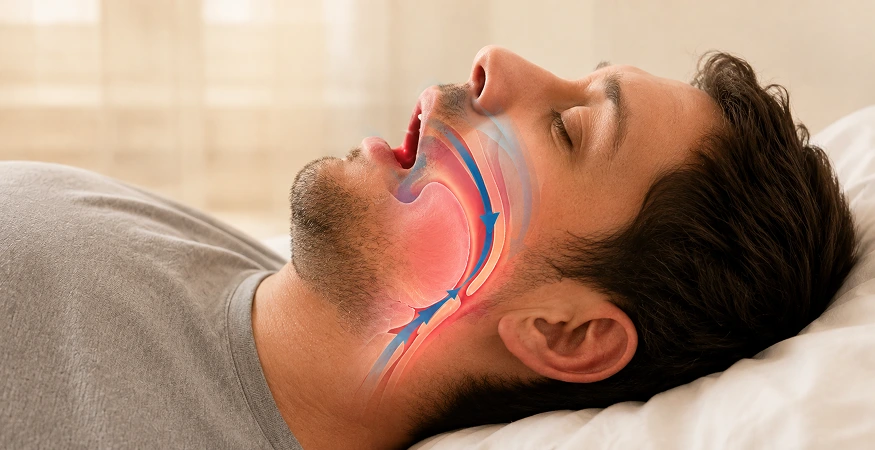
During healthy sleep, air should move smoothly through the nose and upper airway. When the airway becomes narrow, the tissues around the soft palate, tongue and throat can vibrate as air passes through. That vibration produces the familiar sound of snoring.
When nasal breathing becomes difficult, a person may naturally switch to breathing through the mouth. This is where the connection becomes easier to understand.
Mouth breathing exposes the oral tissues to a constant flow of air and overnight, that airflow can increase moisture loss from the mouth and throat. If saliva production is already reduced, the effect can be more noticeable by morning.
The result may be a sticky sensation, cracked lips, unpleasant breath, a rough tongue or difficulty swallowing after waking. Saliva plays an important protective role because it helps wash food particles away, supports the teeth with minerals and limits the growth of harmful microorganisms. Persistent dryness can therefore increase the risk of tooth decay and oral infections.
So the issue is not simply waking up thirsty. Repeated nighttime mouth breathing can affect both sleep quality and oral health.
The upper airway is not a rigid tube. During sleep, muscles naturally relax. In some people, this relaxation allows the tongue, soft palate or other soft tissues to move closer to the airway.
If the passage becomes narrower, airflow becomes turbulent. The tissues vibrate and produce the sound associated with snoring. If the airway becomes significantly blocked, breathing may stop or become severely reduced for short periods. This is the basic mechanism behind obstructive sleep apnea.
A person may not remember these breathing interruptions. Instead, the body can briefly arouse from sleep to restore airflow. This cycle may happen repeatedly without the person becoming fully awake. That is why someone can spend seven or eight hours in bed and still wake up exhausted.
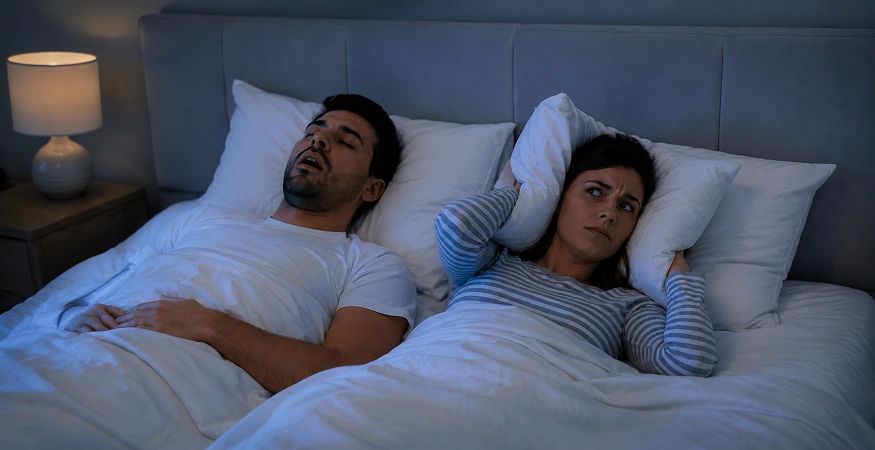
No. This difference matters. Many people snore without having obstructive sleep apnea. Nasal congestion, allergies, alcohol consumption, sleeping on the back, anatomical differences and excess tissue around the upper airway can all contribute to snoring.
However, loud or frequent snoring becomes more concerning when it appears with other symptoms. Pay attention if there are:
The National Heart, Lung, and Blood Institute lists frequent loud snoring, breathing interruptions, gasping and dry mouth among recognised symptoms of sleep apnea.
The important point is that the sound itself does not tell the whole story. The pattern of breathing and the symptoms that follow are much more useful.
Not every case of morning mouth dryness comes from nighttime breathing. Medication is a common cause. Hundreds of medicines can reduce saliva production, including some medicines used for high blood pressure, depression and bladder problems. Certain medical conditions can also contribute to persistent dry mouth.
Dehydration can make the problem worse. Alcohol and tobacco can also contribute to oral dryness. A blocked nose from allergies or a cold may encourage mouth breathing even when sleep apnea is not present.
For example, someone with chronic nasal congestion may sleep with their mouth open every night. They may wake with a dry tongue and unpleasant breath but have no breathing pauses. Treating the nasal problem may improve the symptoms.
This is why a proper assessment is more useful than assuming every case has the same cause.
Occasional snoring after a late night, alcohol consumption or a heavy cold is usually less concerning. Persistent symptoms are different.
If your partner regularly notices pauses in breathing, choking or gasping, arrange a medical assessment. The same applies if you regularly wake exhausted despite getting enough time in bed.
Morning dryness is particularly worth discussing when it occurs alongside loud snoring and daytime fatigue. Research has found that mouth dryness becomes more common as obstructive sleep apnea becomes more severe. One study reported mouth dryness in 71% of participants with moderate or severe obstructive sleep apnea, compared with 40% among those with mild or no obstructive sleep apnea.
These numbers do not diagnose an individual. They show why the symptom should not simply be dismissed.
Start by observing your sleep pattern rather than relying only on how you feel in the morning.
Ask your sleeping partner whether they notice loud breathing, pauses, choking or repeated movements. If possible, keep a simple record of morning headaches, daytime sleepiness, mouth dryness and how rested you feel.
You can also review factors that may worsen nighttime breathing. Sleeping on your side may help some people who have positional symptoms. Limiting alcohol close to bedtime can also be useful because alcohol can relax the upper-airway muscles and increase the risk of airway narrowing.
For persistent mouth dryness, adequate hydration, good oral hygiene and sugar-free chewing gum may help stimulate saliva. Avoid tobacco and limit alcohol. If medication appears to be contributing, speak with the prescribing clinician rather than stopping it yourself.
These steps can support comfort, but they should not replace an assessment when sleep apnea is suspected.
A clinician may review your symptoms, medical history, airway anatomy, medications and risk factors. If obstructive sleep apnea is suspected, a sleep study may be recommended. Depending on the circumstances, this may involve monitoring breathing, oxygen levels, heart rate and sleep-related events.
The goal is not simply to make the snoring quieter. It is to identify why airflow is being disrupted and determine whether treatment is needed.
Treatment depends on the cause and severity. Some people benefit from positional changes or management of nasal obstruction. Others may require therapies such as positive airway pressure or an oral appliance designed to reposition the jaw and help maintain airway space.
A dental sleep specialist can play an important role when an oral appliance is appropriate. The device needs to be selected, fitted and monitored properly rather than treated as a generic mouthguard.
Do not wait for the problem to become severe if the symptoms are persistent. Always seek professional evaluation if you have loud, regular snoring combined with morning dryness, daytime sleepiness, headaches, witnessed breathing pauses or gasping.
You should also seek help when persistent dry mouth is causing difficulty swallowing, recurrent mouth infections, sores or increasing dental problems.
The right evaluation can distinguish ordinary mouth breathing from a more significant sleep-related breathing disorder.
Waking with a dry mouth may seem like a small inconvenience. When it happens repeatedly alongside nighttime breathing problems, it can be a useful clue.
The connection between snoring, mouth breathing and obstructive sleep apnea is real, but the symptoms can have several causes. Understanding the difference is the first step towards choosing the right treatment.
If nighttime breathing problems are affecting sleep, comfort or your relationship with your bed partner, Right Bite Sleep and TMJ Pain Care can help you explore the underlying issue and discuss appropriate sleep-focused dental care. With our professional assessment, you can determine whether an oral appliance or another approach is suitable for your situation.
Do not settle for another morning of poor sleep, dry mouth and fatigue without understanding why it is happening. Getting the cause assessed can make the path towards better sleep much clearer.
Yes. Snoring often occurs when airflow is partially restricted, and many people respond by breathing through the mouth. Overnight mouth breathing can increase moisture loss and leave the mouth and throat dry in the morning.
No. Dry mouth has many possible causes, including medication, dehydration, nasal congestion and mouth breathing. However, persistent morning dryness combined with loud snoring, breathing pauses or daytime sleepiness should be assessed.
Frequent or loud snoring deserves attention when it disrupts sleep or occurs with gasping, choking, breathing pauses, morning headaches or daytime sleepiness. These symptoms can indicate obstructive sleep apnoea.
For selected patients with obstructive sleep apnea or certain types of snoring, a professionally fitted oral appliance may help keep the airway open. Suitability depends on the individual’s airway, jaw position, dental health and severity of the condition.
Yes. Persistent dry mouth can increase the risk of tooth decay and oral infections because saliva protects the teeth and oral tissues. A dentist can assess oral health and help identify whether further medical or sleep evaluation is appropriate.
Contact us
Our other blogs
How to Improve Sleep: Simple Tips to Sleep Better and Wake Up Refreshed
Home > Blogs > How to Improve Sleep: Simple Tips to Sleep Better and Wake Up Refreshed How to Improve Sleep: Simple Tips to Sleep
How to Stop Bruxism at Night: Causes & Treatment | The Right Bite
Waking up with a dull, throbbing headache, a tender jaw, or sensitive teeth? You aren’t alone. Millions of people ground their teeth while sleeping without

Why Migraine Headache Occurs: Causes, Symptoms & How to Cure
A migraine headache is a form of a severe headache and is accompanied by a host of other symptoms. Migraines can interfere with daily routine
WhatsApp us